

Long-Ester Drostanolone and the Case for Hormonal Stability in Extended Cutting Research
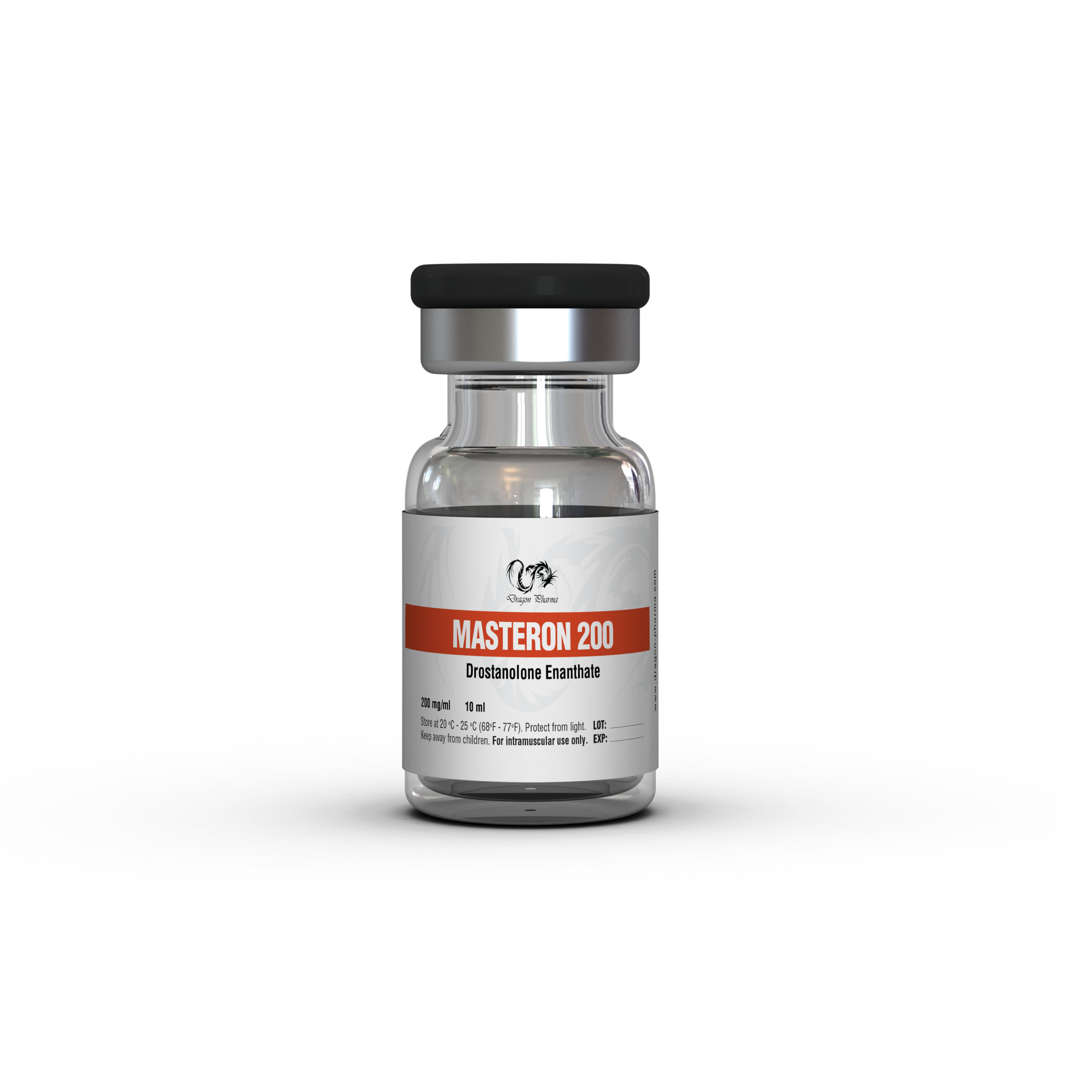
| Classification | Dihydrotestosterone (DHT) Derived Anabolic-Androgenic Steroid |
|---|---|
| Active Ingredient | Drostanolone Enanthate – 200 mg |
| Total Strength | 200 mg/mL |
| Presentation | 10 mL Multi-Dose Vial |
| Manufacturer | Dragon Pharma |
| Active Life | Approximately 10–14 days |
| Typical Dosage | 200–600 mg per week |
| Aromatization Potential | None |
| Liver Toxicity | None |
| Anabolic Rating | 62–130 |
| Androgenic Rating | 25–40 |
Overview
There’s a recurring pattern in performance research that doesn’t get discussed as often as it should: the gap between what a compound does pharmacologically and what a researcher actually experiences across a multi-week protocol. A compound that produces excellent outcomes in a six-week window may not translate those outcomes as cleanly into a twelve-week protocol, not because the compound changed, but because the hormonal environment surrounding it looks very different at week ten than it did at week two.
This is the central argument for long-ester Drostanolone in extended cutting research — and it’s a more nuanced case than simply “fewer injections.” Understanding it requires looking at what hormonal stability actually means in a cutting context, and why the pharmacokinetic properties of long esters produce a meaningfully different research environment than Dragon Pharma Masteron short esters over time.
The Stability Problem in Extended Protocols
Drostanolone’s anti-estrogenic activity is
a case in point. The compound’s inherent ability
to oppose estrogenic effects in a stack is
concentration-dependent — it’s more pronounced
when blood levels are at their peak and diminishes
as levels fall toward trough. In a short-ester
protocol, this produces fluctuating anti-estrogenic
activity that rises and falls with the injection
cycle. In a long-ester protocol, the flatter
blood-level curve produces more consistent
anti-estrogenic activity throughout the week —
a meaningful difference for researchers studying
estrogen balance in multi-compound cutting stacks
over extended periods. The conventional framing of the
short-ester-versus-long-ester decision focuses
almost entirely on injection frequency —
short esters require more injections,
long esters require fewer. This framing
is accurate but incomplete. Ester length also determines the shape of
the blood-level curve between doses,
which affects everything from mood and
energy stability to libido and recovery
quality. Long esters produce flatter curves
with smaller peak-to-trough differences.
The practical experience of researching
a compound with a flat blood-level curve
versus a compound with pronounced peaks
and troughs isn’t just a pharmacokinetic
abstraction — it translates into
measurable differences in day-to-day
hormonal consistency across the protocol. For cutting protocols specifically,
where caloric restriction already introduces
stress on the hormonal environment,
minimizing additional hormonal volatility
from pharmacokinetic sources has a
practical rationale that goes beyond
injection convenience. Extended cutting protocols — those running
ten to twelve weeks or longer — typically
involve multiple compounds, and ester
alignment becomes increasingly important
as cycle length grows. Mixing ester lengths
in a long protocol creates progressively
more complex pharmacokinetic interactions:
short-ester compounds reach steady-state
quickly but introduce weekly volatility,
while long-ester compounds take longer
to stabilize but then maintain flatter
curves once they do. When all compounds in a stack share
similar ester lengths, they reach
steady-state at roughly the same time,
peak and trough together, and clear
at comparable rates when the cycle ends.
This synchronized profile simplifies
both the active research protocol
and the post-cycle management —
particularly important when designing
PCT timing around multiple compounds
with different clearance windows. Drostanolone Enanthate’s seven-to-ten-day
half-life aligns closely with Testosterone
Enanthate and Testosterone Cypionate —
the most common testosterone base choices
in extended cutting research. This alignment
is part of why long-ester Drostanolone
tends to appear alongside these specific
testosterone esters rather than with
shorter-acting testosterone variants. The most significant limitation of long-ester
Drostanolone in cutting research is its slower
onset — typically two to three weeks before
blood levels stabilize and the compound’s
full effects become consistently present.
For researchers working with tight timelines,
this ramp-up period represents a meaningful
portion of a short cycle during which the
compound isn’t delivering its full effect. Extended protocols solve this problem by design:
a twelve-week cycle loses proportionally far
less total research time to the two-to-three-week
ramp-up than a six-week cycle does.
The longer the protocol, the smaller
the fraction of total cycle time spent
at sub-therapeutic concentrations —
which is one of the more straightforward
arguments for matching ester length to
intended cycle duration rather than
defaulting to one ester type
regardless of protocol length. One often-overlooked dimension of the
long-ester decision is its effect on
post-cycle management. Because long esters
continue releasing active hormone for
an extended period after the final injection,
post-cycle therapy cannot begin immediately
after stopping — the compound is still
active in the system, and introducing
SERMs while the compound is still
suppressing the HPG axis reduces
their effectiveness. Standard practice for enanthate-length
compounds is to wait approximately
ten to fourteen days after the final
injection before initiating PCT —
allowing sufficient clearance for
SERM therapy to begin stimulating
LH and FSH production effectively.
This extended clearance window is
the direct pharmacokinetic cost
of the long ester’s stability advantage,
and researchers planning extended protocols
need to account for it in total cycle
duration planning. Long-ester Drostanolone is not the
universally superior choice — it’s the
contextually appropriate choice for
specific research conditions:
extended cycle lengths, stable hormonal
environment priorities, ester-aligned
multi-compound stacks, and protocols
where the injection frequency burden
of short esters over many weeks
would create meaningful compliance challenges. The decision between short and long
Drostanolone esters maps cleanly onto
a single question: is the protocol
optimizing for speed and control,
or for stability and sustainability?
Short esters answer the first question;
long esters answer the second.
Neither answers both simultaneously —
which is why both continue to appear
in cutting research literature despite
the existence of the other. For researchers comparing the complete
formulation specifications for long-ester
Drostanolone Enanthate — including
concentration, dosing structure,
and stacking considerations —
Dragon Pharma’s Masteron 200 page
provides the detailed product breakdown
for this specific long-ester formulation.
Those building extended cutting protocols
around multiple injectable compounds
can browse the complete range of
pharmaceutical-grade anabolic steroids,
peptides, and SARMs at the
browse all Dragon Pharma products.Why Ester Length Affects More Than Injection Frequency
The Ester Alignment Principle in Long Cutting Stacks
The Onset Trade-Off and How Protocols Manage It
PCT Timing and Long-Ester Clearance
Where This Leaves the Ester Decision