

The Pharmacology of Short Esters in Contest Prep — Why Timing and Control Matter More Than Potency
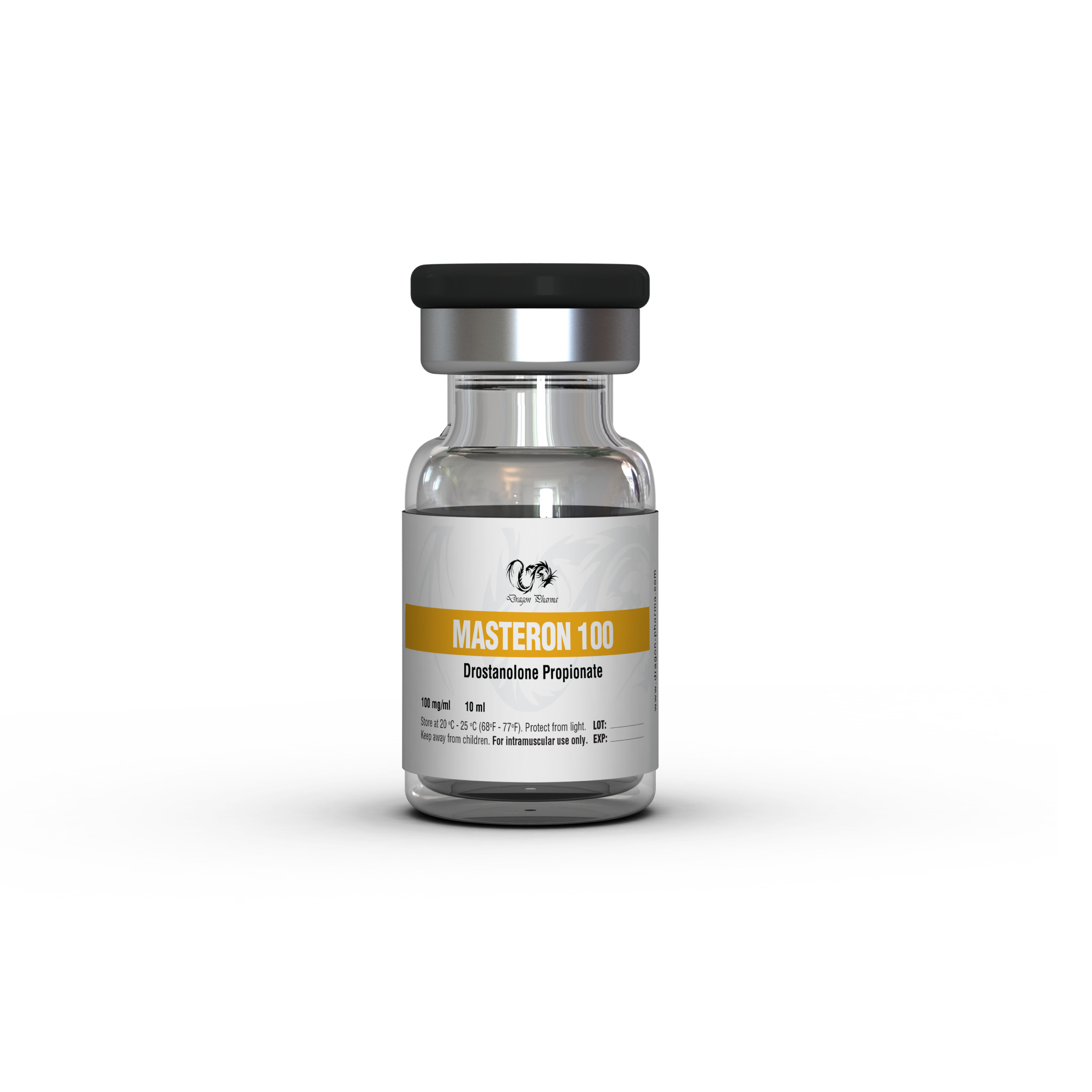
| Classification | Dihydrotestosterone (DHT) Derived Anabolic-Androgenic Steroid |
|---|---|
| Active Ingredient | Drostanolone Propionate – 100 mg |
| Total Strength | 100 mg/mL |
| Presentation | 10 mL Multi-Dose Vial |
| Manufacturer | Dragon Pharma |
| Active Life | Approximately 2–3 days |
| Typical Dosage | 300–600 mg per week |
| Aromatization Potential | None |
| Liver Toxicity | None |
| Anabolic Rating | 62–130 |
| Androgenic Rating | 25–40 |
Overview
When competitive bodybuilders and physique researchers discuss the final weeks before a contest or photoshoot, the conversation almost always turns to control — not just over diet and training, but over the pharmacokinetic behavior of every compound in the protocol. This is where short-ester compounds earn their place, and why Drostanolone Propionate specifically has remained a fixture in final-phase cutting research despite the existence of longer-acting alternatives that require far less frequent injection.
Understanding why requires looking past the compound itself and into the underlying logic of short-ester pharmacokinetics — and what “control” actually means in a research context where the timeline is compressed and the margin for error is narrow.
What Ester Length Actually Controls
Every injectable anabolic steroid consists of two parts: the active hormone and an ester chain attached to it. The ester chain doesn’t contribute to the compound’s biological activity — its entire function is to control the rate at which the active hormone is released from the injection depot into systemic circulation.
Short esters hydrolyze rapidly. The ester bond breaks down quickly, releasing the parent hormone into circulation within hours of injection. This produces a fast concentration peak, but that peak also declines quickly — which is why short-ester compounds require frequent injection to maintain stable blood levels. Without consistent dosing, concentrations spike sharply after each injection and fall significantly before the next dose, producing the kind of peak-and-trough pattern that undermines hormonal stability.
Dragon Pharma Masteron long esters hydrolyze slowly, producing a flatter, more extended release curve — but at the cost of slower onset and a much longer clearance time when dosing stops. That clearance time is the critical variable that makes long esters less suitable for protocols where rapid adjustment or fast exit is a priority.
Why Fast Clearance Matters in Final-Phase Protocols
Contest prep research operates on tight, non-negotiable timelines. The final four to six weeks before a competitive event represent a window where researchers need compounds that respond predictably to dosing decisions made days — not weeks — earlier. If a protocol adjustment is needed, or if a side effect emerges that requires discontinuation, the time between stopping a compound and seeing its blood levels clear is directly determined by ester length.
A long-ester compound stopped ten days before contest day continues releasing active hormone for that entire period. A short-ester compound stopped three days before an event has largely cleared by competition day. This clearance speed — not potency, not mechanism, not even the compound’s reputation — is the primary pharmacokinetic argument for short-ester selection in final-phase cutting research.
Drostanolone Propionate’s approximately 2.5-day half-life sits at a practical sweet spot: short enough to clear rapidly when needed, but long enough that every-other-day injection maintains reasonably stable concentrations rather than requiring daily administration.
The Dose Control Argument
There’s a second, less-discussed advantage to short esters that matters more in research contexts than it often gets credit for: the ability to make meaningful dosing adjustments on a short timeline. With a long-ester compound, reducing the weekly dose produces a gradual blood-level change that takes multiple half-lives to fully reflect in circulating concentrations — often two to three weeks before the full effect of the adjustment appears.
With a short-ester compound, a dose reduction produces a measurable change in circulating concentrations within days. For researchers studying how specific concentration ranges affect physique outcomes, this responsiveness is genuinely valuable — it allows more iterations within a given cycle length than longer esters permit.
Where Drostanolone Fits This Framework
Drostanolone — the active hormone in both Masteron ester variants — brings its own properties to this framework independent of ester length. As a DHT-derived compound, it doesn’t interact with the aromatase enzyme, meaning it produces no estrogenic conversion regardless of dose. This non-aromatizing profile is relevant to the short-ester argument in a specific way: because researchers can’t rely on estrogen conversion to moderate any hormonal imbalances, precise dosing control becomes more important, not less — and the short ester’s responsiveness to dosing changes supports that precision.
Drostanolone’s anti-estrogenic activity also adds a stack-management dimension that’s worth understanding. When run alongside aromatizing compounds like testosterone, Drostanolone’s inherent estrogen-opposing properties can partially offset estrogenic effects from the testosterone fraction — but this balance is dose-sensitive and individual-specific. The ability to fine-tune Drostanolone Propionate doses quickly, based on observed estrogen-related outcomes in a broader stack, is another practical advantage of the short ester in multi-compound research protocols.
The Injection Frequency Trade-Off
None of this means short esters are universally superior — the every-other-day injection requirement is a genuine burden that longer esters solve entirely. The injection site irritation that propionate-class esters are known for, multiplied by an every-other-day frequency, creates cumulative tissue stress that becomes a real research consideration over six to eight week protocols. Site rotation, injection technique, and formulation quality all affect how manageable this burden is in practice.
The decision between short and long ester isn’t really about which is better in an absolute sense — it’s about which trade-off profile fits the specific research question being asked. Short cycles with tight timelines, rapid adjustment needs, or fast clearance requirements favor short esters. Extended cycles prioritizing stability and injection convenience favor longer esters.
Practical Implications for Stack Design
One underappreciated consideration in multi-compound research protocols is ester alignment — the practice of matching ester lengths across all compounds in a stack to synchronize their onset, peak activity, and clearance timelines. Mixing short and long esters in the same protocol creates mismatched pharmacokinetic curves that complicate interpretation of results and can produce hormonal instability as individual compounds reach and clear their respective peaks on different schedules.
Short-ester Drostanolone Propionate pairs pharmacokinetically with other short-ester compounds — Testosterone Propionate and Trenbolone Acetate being the most common stack partners in cutting research literature. All three compounds share similar half-life ranges and injection frequency requirements, producing a coherent composite pharmacokinetic profile rather than the layered complexity that ester-mismatched stacks introduce.
The Bigger Picture
The popularity of short-ester compounds in final-phase cutting research isn’t driven by these compounds being more potent or more effective than their long-ester equivalents — the active hormone is identical in both cases. It’s driven by the pharmacokinetic properties that short esters provide: fast onset, rapid clearance, and responsive dose control. Understanding this distinction helps researchers make more informed ester-selection decisions based on actual protocol requirements rather than compound reputation or marketing convention.
For researchers interested in the specific formulation details, concentration, and stacking considerations for Drostanolone Propionate, Dragon Pharma’s Masteron 100 page covers the complete product breakdown for this specific short-ester formulation. Those exploring the broader range of injectable cutting compounds can browse Dragon Pharma’s injectable steroid catalog for comparative ester-length and compound-class options.