

Description
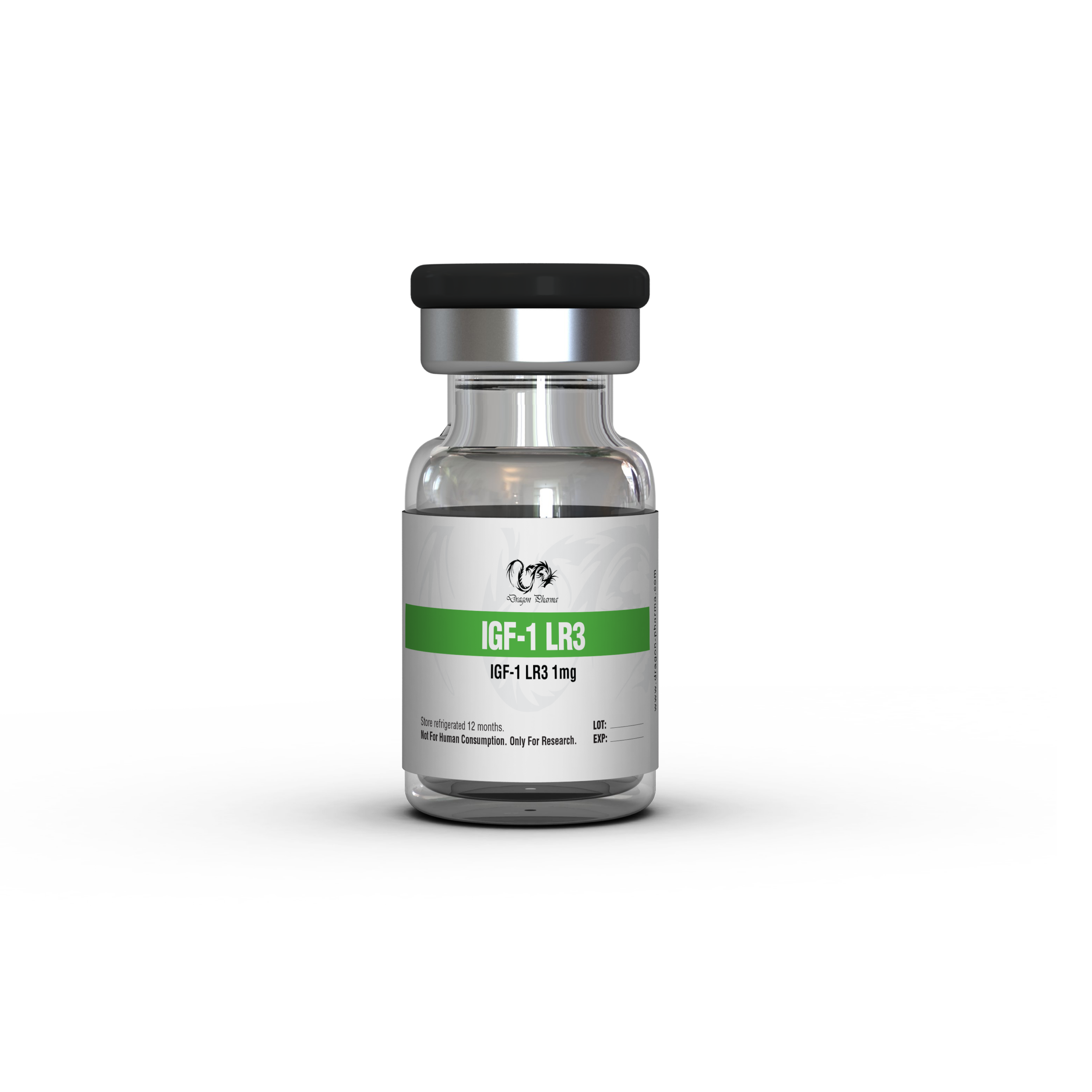
Dragon Pharma IGF-1 LR3 1mg – Research-Grade Modified Peptide Overview
IGF-1 LR3 is a synthetic analog of insulin-like growth factor-1, and it features an extended amino acid sequence that alters receptor interaction behavior in experimental environments. In molecular biology and biochemical research, Dragon Pharma IGF-1-LR3 serves as a research-grade investigational peptide. Researchers use it to study growth factor signaling pathways, receptor binding dynamics, and protein interaction mechanisms under controlled laboratory conditions. Dragon Pharma IGF-1-LR3 remains strictly designated for in-vitro, in-vivo, and computational research, and it does not have approval for human or veterinary use.
Moreover, IGF-1 LR3 allows researchers to evaluate how structural modifications influence signaling activity. Because of its modified sequence, scientists can observe prolonged receptor interaction behavior in experimental models. As a result, this peptide becomes a valuable tool in receptor signaling research, molecular activation studies, and protein pathway mapping.
Dragon Pharma IGF-1 LR3 Receptor Signaling and Growth Factor Mechanism Studies
- Synthetic IGF-1 analog (Long R3 variant peptide)
- Research compound: Dragon Pharma IGF-1 LR3 1mg
- Modified amino acid sequence designed for receptor interaction studies
- Reduced binding affinity to IGF-binding proteins in experimental systems
- Stable peptide structure under controlled laboratory conditions
- Used in receptor-ligand interaction and signaling pathway research
- Applied in cellular communication and growth factor modeling studies
- Evaluated in protein expression and molecular activation experiments
- Suitable for in-vitro, in-vivo, and computational simulations
- Investigated in peptide stability and structural modification research
Scientific Background and Molecular Mechanism Overview
IGF-1 LR3 represents a modified form of insulin-like growth factor-1, and researchers extend its amino acid chain to alter biochemical behavior compared to native IGF-1. Consequently, Dragon Pharma IGF-1 LR3 allows scientists to study how structural changes affect receptor binding affinity and downstream signaling pathways.
In research models, the reduced binding to IGF-binding proteins increases observable receptor interaction duration. Therefore, investigators use IGF-1 LR3 to analyze sustained signaling activity in controlled systems. Additionally, this feature helps researchers compare native IGF-1 activity with modified analog behavior in receptor tyrosine kinase pathways.
Furthermore, scientists apply IGF-1 LR3 in molecular biology studies that focus on phosphorylation cascades, protein expression responses, and intracellular communication systems. As a result, the peptide contributes to a deeper understanding of growth factor signaling mechanisms under experimental conditions.
Dragon Pharma IGF-1 LR3 Laboratory Analysis and Protein Stability Evaluation
Lab Test Results – Dragon Pharma IGF-1 LR3 1mg
This section provides third-party laboratory validation data that confirms molecular identity, structural integrity, and research-grade purity standards.
Typically, laboratories report:
- High-Performance Liquid Chromatography (HPLC) purity analysis
- Mass spectrometry confirmation of IGF-1 LR3 molecular structure
- Certificate of Analysis (COA) batch verification
- Peptide sequence validation and structural authentication
Additionally, these results help researchers verify consistency across batches and ensure reliable performance in controlled experimental environments.
IGF-1 LR3 Peptide Structure and Binding Affinity Research Models
In molecular research, scientists use IGF-1 LR3 as a model compound to study growth factor receptor signaling and peptide-mediated cellular communication pathways. Because of its modified structure, researchers can clearly observe how extended peptide analogs behave differently from native growth factors.
For example, investigators analyze receptor-ligand binding affinity changes and compare signaling duration across different experimental conditions. In addition, they study phosphorylation cascade responses and downstream protein expression changes.
Common laboratory applications include:
- Growth factor receptor activation modeling
- Protein phosphorylation pathway analysis
- Receptor-ligand binding interaction studies
- Cellular signaling cascade simulations
- Comparative peptide structure-function evaluation
- Molecular expression response modeling
Overall, all applications remain strictly limited to laboratory research, computational modeling, and theoretical biochemical analysis.
Integrated Research Keyword Framework
Peptide Structure & Molecular Engineering
- IGF-1-LR3 analog peptide structure
- synthetic growth factor peptide modification
- amino acid sequence extension modeling
- peptide receptor binding configuration
- protein engineering research compound
- structural biology peptide modification studies
Cellular Signaling & Receptor Interaction
- insulin-like growth factor receptor signaling
- receptor tyrosine kinase activation pathways
- cellular proliferation signaling models
- phosphorylation cascade analysis
- growth factor receptor affinity studies
- intracellular signaling pathway research
Laboratory & Experimental Methodology
- in-vitro receptor binding assays
- in-vivo peptide modeling systems
- mass spectrometry peptide validation
- chromatography purity testing IGF analogs
- biochemical signaling simulation models
- protein expression analysis systems
Stability & Biochemical Behavior
- IGF binding protein interaction reduction
- peptide stability under enzymatic conditions
- molecular half-life extension modeling
- structural resistance to proteolytic degradation
- pH stability peptide behavior analysis
- ligand-receptor kinetic modeling
External Scientific References
For deeper scientific context on IGF signaling, peptide structure, and molecular biology, researchers often consult:
- https://www.ncbi.nlm.nih.gov/ – National Center for Biotechnology Information (IGF signaling databases)
- https://pubmed.ncbi.nlm.nih.gov/ – Peer-reviewed studies on growth factor biology and receptor mechanisms
- https://www.nature.com/ – Molecular biology and cellular signaling research publications
- https://www.sciencedirect.com/ – Biochemical and protein interaction research literature
These resources provide foundational scientific data on growth factor signaling, peptide engineering, and receptor interaction systems.
Research Relevance Summary
Overall, Dragon Pharma IGF-1 LR3 functions as a modified peptide model used in laboratory research to evaluate growth factor signaling, receptor interaction dynamics, and molecular pathway activation. Because of its extended structure, it allows researchers to observe differences in receptor behavior and signaling duration compared to native IGF-1. Consequently, it plays an important role in biochemical and molecular biology research focused on engineered peptide analogs and cellular communication systems.
Reviews
There are no reviews yet.