

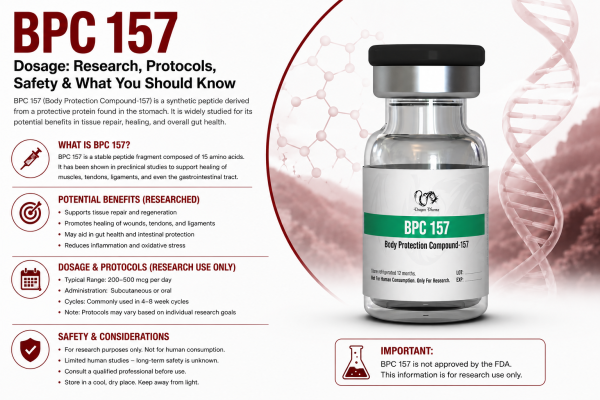
BPC 157 has become one of the most discussed research peptides in regenerative medicine and sports performance communities. Many people search for BPC 157 dosage, BPC 157 dose, or BPC 157 dosage guide hoping to find clear answers.
This article reviews what BPC 157 is and how dosage is discussed in research. It also covers current clinical evidence, potential benefits under investigation, and important safety considerations.
What Is BPC 157?
BPC 157 stands for Body Protection Compound 157. It is a synthetic peptide with 15 amino acids. Researchers derived it from a protein found naturally in gastric juice. It has attracted attention for its potential role in tissue repair, tendon healing, ligament recovery, muscle recovery, wound healing, and gastrointestinal health.
Researchers have studied BPC 157 across many animal models. These studies covered tendon and ligament injuries, muscle damage, bone healing, gut lining protection, inflammation, gastrointestinal ulcers, and peripheral nerve injuries.
However, well-designed human clinical trials remain limited. Therefore, many questions about effectiveness and safety are still unanswered.
How BPC 157 Dosage Is Measured
Conventional medications come with approved prescribing information. BPC 157 peptide In research, quantities are measured in micrograms (mcg) or milligrams (mg). Furthermore, concentration and formulation can vary significantly between manufacturers.
Is There an Official Recommended Dosage?
At present, no officially recommended BPC 157 dosage for humans exists. No major medical organization has published approved recommendations. This applies to daily dosage, dosage by weight, protocols, cycles, oral dosage, and injection dosage. Most information online comes from anecdotal reports or animal research. Consequently, any dosing information found online should be interpreted with caution.
Common Dosage Ranges Used
People frequently search for BPC 157 dosage for recovery, tendon healing, or muscle recovery.
| Route | Typical Daily Range | Frequency | Duration | Common Use |
|---|---|---|---|---|
| Subcutaneous Injection | 250–500 µg | 1–2× daily | 4–6 weeks | Muscle, tendon, and joint recovery |
| Oral / Sublingual | 200–500 µg | 1–2× daily | 6–8 weeks | Gut health support and inflammation management |
| Intramuscular Injection | 250–500 µg | 1× daily | 4–6 weeks | Targeted support for localized injury repair |
Injectable vs Oral BPC 157
BPC 157 Injections
Subcutaneous administration has become popular in research settings. It bypasses digestion and may affect systemic exposure differently than oral delivery. However, no approved injectable dosing protocol exists for clinical use.
Oral BPC 157
Researchers have also studied oral formulations. This is partly because BPC 157 relates to the gastrointestinal tract. Nevertheless, standardized recommendations do not currently exist. Moreover, whether one route offers superior outcomes remains unclear. Human clinical evidence is still too limited to draw firm conclusions.
Factors That Affect Dosage
Several variables may affect how researchers design peptide studies. These include age, body weight, and overall health. Additionally, the type of injury, desired treatment duration, route of administration, peptide purity, and manufacturing standards all play a role. As a result, no single dosage framework applies across all research contexts.
Typical Cycle Length
Currently, no medically established cycle duration for BPC 157 exists. It remains an investigational compound. Furthermore, research studies vary considerably in treatment length. This makes it difficult to compare results or recommend a standardized protocol.
Potential Benefits Being Studied
Although more human research is needed, investigators continue exploring BPC 157. Areas of interest include tendon healing, ligament recovery, muscle recovery, tissue repair, wound healing, and gastrointestinal health. Researchers are also studying gut lining protection, inflammation reduction, and musculoskeletal injury recovery. However, these findings should not be interpreted as proof that BPC 157 treats any medical condition.
Possible Risks and Side Effects
The long-term safety profile of BPC 157 has not been fully established. Human clinical data remain limited, so researchers continue evaluating potential adverse effects. Anecdotal reports have mentioned injection site irritation, headache, nausea, fatigue, and temporary dizziness. However, these reports do not establish causation. Unknown long-term risks remain an important consideration.
Who Should Avoid BPC 157?
Because safety data are incomplete, certain groups should generally avoid BPC 157. These include pregnant or breastfeeding individuals, children and adolescents, and people with serious underlying medical conditions. Additionally, anyone using medications that could interact with experimental peptide therapies should consult a healthcare professional first.
Storage and Handling
Proper storage helps maintain peptide stability. In general, store products according to manufacturer instructions. Furthermore, protect them from excessive heat and direct sunlight. Refrigerate reconstituted products when recommended, and avoid contamination during handling.
Frequently Asked Questions
What is the recommended BPC 157 dosage?
There is currently no officially approved BPC 157 dosage for human use.
Is BPC 157 approved for medical treatment?
No. BPC 157 is an investigational research peptide. Major regulatory agencies have not approved it for routine medical use.
Is oral BPC 157 better than injections?
Researchers continue studying both methods. However, insufficient clinical evidence exists to conclude that one approach is superior.
How long should a BPC 157 cycle last?
No established medical recommendation exists for BPC 157 cycle length. Standardized human treatment protocols have not been developed.
Is BPC 157 considered safe?
Preclinical studies suggest a generally favorable safety profile. Nevertheless, high-quality human clinical evidence remains limited, and long-term safety has not been established.
Final Thoughts
Interest in BPC 157 dosage, BPC 157 dosing, and BPC 157 protocols continues to grow. This reflects broader interest in regenerative medicine and peptide therapy. Laboratory studies have investigated its role in tissue repair, tendon healing, ligament recovery, muscle recovery, gastrointestinal health, and wound healing. However, important questions remain about optimal dosing, long-term safety, and clinical effectiveness. Until larger human clinical trials are completed, BPC 157 should be viewed as an investigational research peptide. Anyone considering peptide-based therapies should seek guidance from a qualified healthcare professional.