

Why NF-κB Became the Central Target in Anti-Inflammatory Peptide Research — and What KPV Peptide Reveals About Precision Inflammation Control
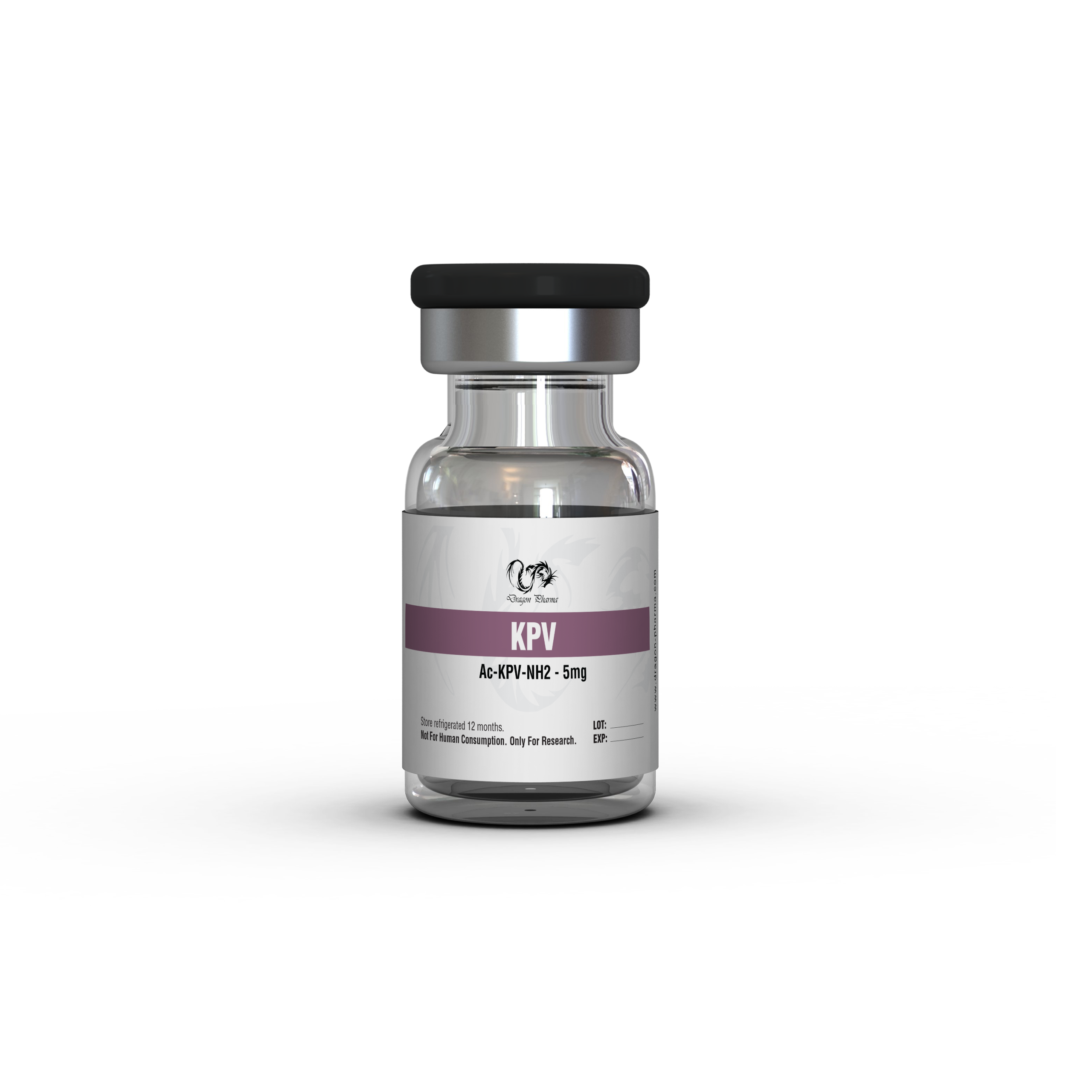
Most discussions of anti-inflammatory compounds start with what they suppress. NSAIDs suppress COX enzymes. Corticosteroids suppress broad immune pathways. Even many research peptides are described primarily in terms of what they reduce — cytokines, inflammatory markers, tissue damage scores in preclinical models.
But framing inflammation control purely as suppression misses the more interesting question: why does the immune system overshoot in the first place, and what would it mean to correct that overshoot rather than simply block it? This distinction — between suppression and regulation — is where Dragon Pharma’s KPV peptide profile becomes genuinely interesting, and where its mechanism reveals something broader about how modern inflammation research is evolving.
The NF-κB Problem
To understand KPV’s research significance, it helps to understand what NF-κB actually does and why it became such a central target in inflammation research over the past two decades.
NF-κB is a transcription factor complex — essentially a master switch that, when activated, turns on the genes responsible for producing pro-inflammatory cytokines including TNF-α, IL-1β, and IL-6. These cytokines are not inherently pathological — they’re the body’s legitimate signaling molecules for coordinating immune responses to infection, injury, and stress. The problem arises when NF-κB activation becomes chronic or disproportionate to the actual threat — a state that underlies conditions ranging from inflammatory bowel disease to chronic joint deterioration to skin disorders like psoriasis and eczema.
The appeal of NF-κB as a research target is straightforward: because it sits upstream of so many inflammatory pathways, modulating its activity in a targeted way could theoretically address a wide range of inflammatory conditions without requiring separate interventions for each downstream cytokine. The challenge has been finding compounds that modulate NF-κB with enough precision to reduce pathological overactivation without compromising the legitimate immune defense functions the same pathway serves.
Where Conventional Anti-Inflammatories Fall Short
Traditional anti-inflammatory approaches solve the overactivation problem by blocking the pathway at a different level entirely. NSAIDs block COX enzymes, preventing prostaglandin synthesis but leaving the broader cytokine cascade largely intact. Corticosteroids take a more comprehensive approach — suppressing multiple immune pathways simultaneously — which produces powerful short-term inflammation control but at the cost of adrenal axis disruption, immune competence reduction, and tissue-level side effects that limit long-term use.
Neither approach distinguishes between pathological NF-κB overactivation and the normal, physiologically necessary NF-κB activity that keeps immune defense functional. Suppression is applied broadly, and the collateral effects follow from that breadth. This is the gap that targeted NF-κB modulation research is trying to close — and the gap that makes compounds like KPV worth studying independently.
KPV’s Structural Logic
KPV is a tripeptide — just three amino acids: Lysine, Proline, and Valine — derived from the C-terminal end of alpha-melanocyte-stimulating hormone (α-MSH). The full α-MSH molecule has broad biological activity spanning pigmentation, appetite regulation, and inflammation control through the melanocortin receptor system. KPV is essentially the inflammation-relevant fragment of that molecule, isolated to retain the anti-inflammatory signaling while stripping away the functions that aren’t relevant to inflammation research.
What makes this structurally interesting is that KPV’s anti-inflammatory activity doesn’t appear to operate entirely through the same melanocortin receptor binding that characterizes full α-MSH action. Research suggests KPV can inhibit NF-κB activation through mechanisms that include but aren’t limited to MC1R and MC3R receptor binding — which may explain why such a small fragment retains meaningful anti-inflammatory potency despite being stripped of most of the parent molecule’s structure.
The practical research implication is significant: a compound this small is stable across multiple administration routes in ways that larger peptides for research often aren’t. KPV maintains bioactivity when taken orally via PepT1-mediated transport in the intestinal epithelium — making it one of the few research peptides genuinely suited to gut inflammation models through oral administration rather than requiring injection to bypass GI degradation.
Precision vs Suppression — What the Research Distinction Means Practically
The difference between KPV’s regulatory mechanism and corticosteroid-based suppression isn’t just pharmacological — it has concrete research implications for what kinds of questions each tool can reliably answer.
Corticosteroids suppress immune function broadly enough that using them in inflammation research introduces confounding variables: you’re not just studying inflammation reduction, you’re studying inflammation reduction plus immune suppression plus HPA axis effects plus any downstream consequences of those combined interventions. Separating the inflammation-specific effects from the suppression-related effects requires additional controls that complicate study design.
A compound that modulates NF-κB activation without broadly suppressing immune function allows researchers to study the inflammatory component more cleanly — the intervention is narrower, the confounding variables are fewer, and the signal-to-noise ratio in outcome measurement improves. This is part of why targeted anti-inflammatory peptides have attracted research attention independent of any clinical application claim — they’re useful tools for isolating inflammatory variables that broader suppressants obscure.
The Route Flexibility Problem in Inflammation Research
One underappreciated dimension of KPV’s research profile is what its multi-route bioavailability means for study design. Most injectable research peptides are effectively limited to systemic administration — the injection route determines where and how the compound distributes, and targeting specific tissue compartments (like the intestinal mucosa) requires complex delivery approaches.
KPV’s oral stability via PepT1 transport means gut-focused inflammation research can use the same compound in the same model via an oral route that actually reaches the target tissue directly — a much cleaner research design for studying intestinal inflammation, barrier integrity, and conditions like colitis than systemic injection into a model where gut tissue is only one of many tissues exposed.
Topical stability adds a third dimension — the same compound that works orally for gut research and subcutaneously for systemic inflammation studies can be formulated into cream or gel vehicles for dermatological research on conditions like psoriasis, eczema, and wound healing without requiring a separate compound for each application.
What This Means for Stacking Logic
Understanding KPV as a regulatory tool rather than a suppressive one changes how it fits into multi-compound research protocols. Because KPV addresses the inflammatory environment rather than structural damage, it functions most effectively as a foundation that other repair-focused compounds build on — not as a replacement for them.
Compounds that drive angiogenesis and structural tissue repair work better in a less inflamed environment. Compounds that stimulate collagen synthesis are more effective when the inflammatory signals disrupting connective tissue remodeling are already controlled. The research logic of combining KPV with structural repair peptides isn’t about redundancy — it’s about sequencing: KPV creates the conditions in which the repair compounds can do their most effective work.
The Broader Research Trajectory
The interest in KPV reflects a broader shift in inflammation research away from blunt suppression and toward pathway-specific modulation. The recognition that NF-κB is a master regulator rather than a single on/off switch — that it serves legitimate functions that shouldn’t be eliminated, only recalibrated when overactive — is driving the search for compounds that can make that distinction at the molecular level.
KPV doesn’t represent the end of that search, but it represents a useful early data point in it: a small, stable, multi-route peptide that appears to modulate NF-κB activity without the systemic immune suppression that makes broader anti-inflammatories difficult to use in precision research contexts. Whether that translates into clinical applications is a question for future trials — but as a research tool for studying inflammation regulation specifically, its profile is genuinely distinct from the alternatives currently available.
Researchers looking for the complete formulation specifications, dosing structure, and stacking considerations for KPV can find the full product breakdown at Dragon Pharma’s KPV 5mg page. Those building broader inflammation or recovery research protocols can explore the full range of pharmaceutical-grade peptides and research compounds at the explore the full peptides catalog.